


Overview:
Indiana University won't renew lecturer Jessica Adams's contract after a student complaint under the state's "intellectual diversity" law targeted her class graphic labeling "Make America Great Again" as covert white supremacy, though the university cited unrelated performance issues.
Indiana University has decided not to renew the contract of Jessica Adams, a School of Social Work lecturer who was investigated after displaying a graphic about white supremacy in a social work class she taught that examined the shifting landscape of diversity, oppression, power, and privilege.
Adams, a full-time lecturer, was teaching her course “Diversity, Human Rights, and Social Justice” during the fall 2025 semester when she showed students an image distinguishing overt forms of white supremacy, described as socially unacceptable, from covert forms described as socially acceptable. Among the covert examples listed was President Trump’s campaign slogan, “Make America Great Again.”
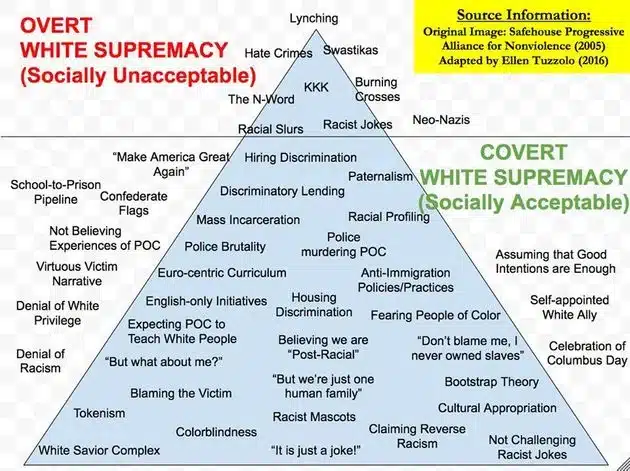
A student objected to the lesson and filed an anonymous complaint alleging that Adams had violated Indiana’s “intellectual diversity” law, which can penalize faculty for failing to present a range of viewpoints in their courses. The student also reported the lesson to U.S. Sen. Jim Banks, a Trump ally, as a possible violation of the statute.
That law, Senate Enrolled Act 202, was passed in 2024 and allows students to report faculty members they believe are not teaching diverse perspectives. The measure has drawn legal challenges; the ACLU of Indiana filed a federal lawsuit seeking to block it, arguing it undermines professors’ free speech. According to prior reporting, the university has fielded nearly 50 intellectual diversity complaints against faculty.
After the complaint, Adams was removed from teaching the course, a step the university acknowledged is atypical for intellectual diversity reviews, while it investigated the material she had presented. She continued to teach her other classes, and the diversity course was covered by guest lecturers. When Adams returned, she was subject to observation by university monitors.
Near the end of the spring 2026 semester, Adams was placed on an improvement plan. The plan cited concerns unrelated to intellectual diversity, including time management and course organization. In May, she received notice from IU Indianapolis Chancellor Latha Ramchand that her employment would end on June 30, the conclusion of her current contract.
Adams has defended the lesson, describing the graphic as a teaching tool directly relevant to a course built around examining power and systems of oppression. Speaking at a press conference alongside campus activist groups, she said she believes instructors should be able to bring such ideas into the classroom and characterized the process and accusation against her as unfair. “I as an instructor should have the ability to bring those ideas into my class,” she said.
The case has become a flashpoint in the broader debate over Indiana’s intellectual diversity requirements and the boundaries of academic freedom in the state’s public universities. Supporters of the law argue it protects students from one-sided instruction, while critics contend it chills faculty speech and discourages the teaching of difficult subjects.
The Council on Social Work Education (CSWE) released a statement about the impact this would have on social work. “Social work education prepares students by strengthening their critical thinking and problem-solving skills, and developing knowledge through research, practice, and scientific inquiry,” it said in a statement released in November. “It prepares students to navigate ideological divides, which are part of everyday life.”
Indiana University has not publicly detailed the reasoning behind its decision not to renew Adams’s contract.