

Overview:
Microteaching exercises in teacher preparation allow preservice teachers to practice, receive feedback, and reflect on literacy instruction, bridging theory and classroom practice while building confidence and skills that carry into their future teaching careers.
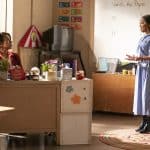
It was a Tuesday afternoon in my Early Literacy Methods course. My students—preservice teachers in their final year before student teaching—were running through a microteaching exercise. The task was simple: model how to help a second grader tackle an unfamiliar word in a decodable text.
One candidate, Emily, froze mid-lesson. She looked at her “student” (a peer role-playing a struggling reader) and hesitated. Then, after taking a breath, she broke the word apart by sound-letter correspondences and guided her partner through isolating,segmenting and blending, and smiled when the lightbulb went on. Later, in her reflection, Emily wrote: “I finally felt like I understood what we were learning and saw the process of orthographic mapping working. I felt like I knew what to do to help a student. “
That moment, though staged in a university classroom, mirrors the same breakthrough every in-service teacher longs for—the instant a struggling reader gains confidence.
Why Teacher Prep Still Matters
Teachers often say: “College didn’t prepare me for what I faced in my first classroom.” It’s a fair critique. Methods courses can sometimes feel abstract compared to the messy reality of student needs, district pacing guides, and classroom management.
But teacher preparation is evolving. By embedding coached microteaching, we give candidates a space to practice real strategies before they walk into classrooms. Instead of theory sitting on the shelf, it becomes muscle memory. And there is no better way to strengthen those long term memory circuits than to have students retrieve and rehearse skills, followed up with reflection on the process. And here’s the bridge: the lessons learned in teacher prep don’t stay on campus. They speak directly to the daily work of in-service teachers.
Getting Ready for Microteaching
Before my students ever step into a microteaching cycle, the groundwork is laid. Microteaching is powerful, but only when candidates know how to give and receive feedback and understand the basics of grouping learners. Two things must occur before jumping into microteaching cycles:
- Learning to Give and Receive Feedback: Early in the semester, we practice feedback protocols together. Candidates learn to be specific (“I noticed you slowed down when the student struggled—what did that accomplish?”) and constructive (“Next time, try prompting with a blend instead of repeating the whole word”). We also practice how to accept feedback without defensiveness. These habits make the later microteaching sessions productive instead of intimidating.
- Understanding Student Grouping: Candidates also explore how grouping impacts literacy instruction. We talk through scenarios: What’s different when you’re working with one child versus a small group? How does peer interaction support or distract from learning? By rehearsing these dynamics in advance, candidates are more confident and responsive during microteaching.
- Explicit Instruction: We also talk about what it means to teach explicitly—breaking learning into clear, step-by-step routines.
By building these foundations first, the microteaching cycles become less about stage fright and more about practicing the art of teaching with clarity and purpose.
What Microteaching Really Looks Like
Deliberate practice is the best way to bridge the get-it, do-it gap. I use a version of microteaching that is based on Bambrick-Santoyo’s model of Theory, See It, Name It, Do It. For example, when teaching teacher candidates how to plan for, write and teach a decoding lesson, it is unpacked into segments. Each segment is a microteaching cycle.
- Explain the theory and science behind a specific skill, such as a Phonemic Awareness warm-up for a decoding lesson.
- Model the strategy so teacher candidates see concrete examples of successful practice of the skill.
- Ask questions to ensure the teacher candidates identify the successful components of the model. This also includes a say-to-write step.
- Teacher candidates rehearse the focused literacy move, such as orally segmenting a word into individual phonemes and then working together to to blend the phonemes into a word. The next step of this rehearsal is to provide a word that the student(s) chorally segment into individual phonemes.
- Receive immediate feedback from peers and the instructor.
- Reflect on what worked, what didn’t, and how it might play out with real students.
The goal isn’t a perfect performance – as Anita Archer says: “Practice doesn’t make perfect, it makes permanence.”. It’s practice with safety nets to help solidify the practice. Candidates learn:
- How to break down each decoding routine into manageable parts.
- How to give feedback that affirms effort while guiding accuracy.
- How to notice when a child is overwhelmed and adjust instruction.
If this sounds familiar, it should. These same steps—rehearse, feedback, reflect—are the backbone of effective professional learning for practicing teachers, too.
Voices from the Field
When candidates head into field placements, they carry these rehearsals with them. Here’s what a few shared afterward:
- “I didn’t realize how much feedback in the moment helped me in my teaching, build it up step by step.
- “Breaking a lesson into small steps helped me see where the wheels came off. I slowed down and it worked.”
- “I used the same decoding routine three times in a row, and by the third time my student was so much more confident.”
Their reflections sound like those of seasoned teachers working through the same puzzles. And that’s the point: teacher prep and in-service teaching aren’t separate worlds. They’re connected by the same principles of learning and reflection.
Connecting to Broader Conversations
This preservice bridge matters even more when we look at the challenges shaping K–12 classrooms today.
- Burnout: Teachers are overwhelmed by initiatives piled on top of daily responsibilities. Microteaching reminds us that focusing on one skill at a time—with feedback and reflection—can lighten cognitive load and restore a sense of progress.
- Equity in Literacy: Struggling readers are disproportionately students of color, multilingual learners, or those with limited access to early literacy supports. When preservice teachers practice equitable scaffolds early, they enter the profession more prepared to support every learner.
- AI in the Classroom: Several candidates experimented with AI tools to generate practice decodable passages or receive feedback on their lesson language. While still emerging, these tools may offer both preservice and in-service teachers new ways to prepare and reflect—if used wisely.
The bridge is not just about teaching reading. It’s about addressing the bigger issues shaping our schools, one small rehearsal at a time.
Lessons for Today’s Teachers
When I shared these microteaching routines with a veteran teacher in our partner district, she told me, ‘I wish I’d practiced like this when I was new. It would’ve saved me years of trial and error.’”So, what can in-service teachers learn from these preservice practices? Here are a few ideas:
- Try a “micro-lesson” rehearsal with a colleague. Teach a five-minute segment to a peer, ask for one piece of feedback, and tweak it before bringing it to your students.
- Build in reflection time. Even five minutes after a lesson can help you notice what clicked and what needs adjusting.
- Use retrieval practice—with yourself and your students. Revisit key moves (like modeling phoneme blending) until they feel automatic.
- Lean on your network. Preservice teachers thrive on peer support as do in-service teachers.
Closing the Loop
When Emily broke down that tricky word in microteaching, it wasn’t just a win for her. It was a win for the student she would later teach in her placement—and for the many readers she’ll meet across her career.
As teacher educators, we can’t fully replicate the whirlwind of a real classroom. But we can help candidates rehearse, reflect, and build the confidence to face it.
And as practicing teachers, we can borrow the same tools: breaking challenges into smaller parts, seeking feedback, and reflecting on our growth. The truth is, we’re all still rehearsing. Whether you’re guiding a kindergartner through letter naming or leading AP discussions, practice and reflection keep us growing. What small rehearsal might you try this week?

Dr. Carla Williams has served in educator preparation for seven years. She is an Associate Professor of Early Childhood and Elementary Education at the University of Central Missouri where she prepares future early childhood and elementary teachers in the teaching of reading. Her interests center around early language and literacy acquisition and effective pedagogy. She is very passionate about the art and science of teaching and learning. Additionally, Dr. Williams supports school districts across the state in the areas of leadership, systems thinking, data, assessment, and effective practices.