
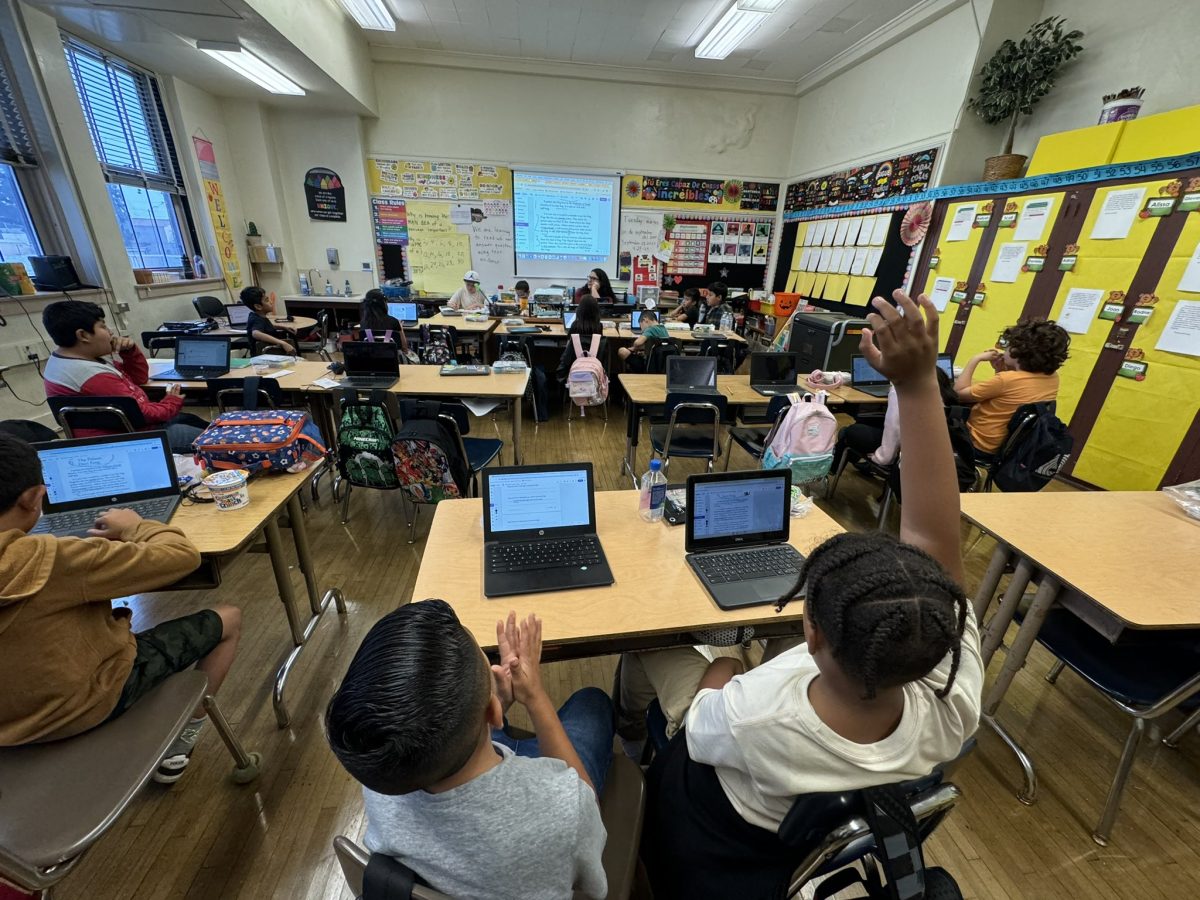

This story was originally published by EdSource. Sign up for their daily newsletter.
The Los Angeles Unified School District unanimously voted to curb classroom screen time, directing staff to develop a policy by June ahead of the upcoming school year.
The resolution aims to set clear limits on how screens are used in classrooms across grade levels. It was championed by Schools Beyond Screens, a group of parents that has spent months pressuring the district to evaluate how the use of devices is impacting student learning, especially in the earlier grades.
The move signals a shift in how the nation’s second-largest school district approaches classroom technology, as officials respond to concerns about excessive use.
“What we don’t have is equity of resource to protect students from the harms of excessive or passive screen time. Today’s screens can be a barrier to instruction,” said a parent at the board meeting immediately before the board’s vote. The proposal coming to the board for approval in June is expected to include:
- Daily and weekly screen time limits by grade level — the example provided in the proposed resolution was no more than one hour per day or five hours per week for third through fifth graders, though no specifics have been provided on actual time limits
- Elimination of student digital device use in early education through first grade, with exceptions made for students enrolled in the district’s virtual learning program and for certain district-mandated assessments
- Prohibition of student access to YouTube
- Considerations to block video games that are not instructional in nature, such as Roblox and Fortnite
- Promoting the use of computer labs and reducing use of individual devices for students in second through fifth grade, while still allowing families to opt in to using district-issued devices at home as a way of ensuring equitable digital access
With the exception of board President Scott Schmerelson, who recused himself, every board member commented on the resolution before listening to public comments and voted in support of the resolution.
“We know that tech is not going away and can be a powerful tool in the classroom. This is not about going backwards. This is about rethinking school time and screen time in schools to ensure we are doing what actually helps students learn best,” said board member Nick Melvoin while discussing the resolution, which he co-authored.
Related Reading
Parents push for reduced screen time a year after Los Angeles Unified bans cellphones
April 2, 2026
Board member Kelly Gonez amended the resolution to include an assessment of the use of i-Ready, a district-mandated assessment implemented in 2023. This amendment appeared to be popular among some of those in the audience, who could be heard clapping and cheering on two separate occasions when board members mentioned reviewing i-Ready.
“I know our families and educators are actively trying to navigate that balance between technology as a learning tool while avoiding excessive, poorly structured screen time that has real consequences for our children,” said Gonez during the board meeting.
“I hope that with this new policy, we’re able to prioritize the uses of technology that have actual, real educational value, like coding, robotics, video production, editing and intervention for targeted students, while de-emphasizing rote tasks like reading text on screens, unlimited video streaming and other passive activities.”
Board member Sherlett Hendy Newbill supported the resolution but questioned whether the timeline was feasible. “I don’t want us to rush this because this means coming back in June. It’s a couple of weeks to be able to do this,” she said, though the board ultimately decided to maintain the June deadline.
While parents and public speakers were largely supportive, some thought the resolution could have gone even further by limiting screen use.
After thanking the board for introducing the resolution, one parent described it as a “baby-step resolution.” The parent continued, stating: “It’s better than nothing, but it has no teeth.”
Among the items this parent was pushing for was the prohibition of screen time through second grade and eliminating requirements for one-to-one device use.