

Overview:
This article explains how true learning depends on the balanced influence of four key forces—parents, schools, society, and self—and why students thrive most when all four work together.
A recent conversation with my wife and other parents made it clear: many parents urgently need a reminder—or even a lesson—on how real learning happens. When my students share stories about their assignments involving parents, it becomes obvious that many adults still believe attending “good” school and classes regularly are the main ingredients for their child’s success.
At its core, learning is a blend of four essential components: parents, schools, society, and self. Some children manage to thrive even if one or two of these are missing—just look at the unconventional paths of many billionaires. Still, the odds of true success soar when all four work in harmony.
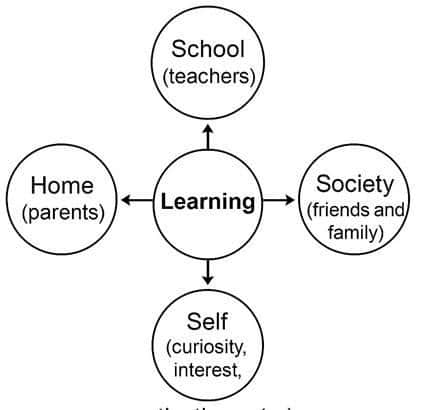
Figure 1: A Simple look at learning influences
Parents
Parents are a child’s very first teachers, drawing the blueprint for growth and success. Yet, in recent decades, more families have handed this responsibility to outsiders. Where once grandparents, aunts, and extended family guided learning, now paid professionals and schools fill the gap. The more money spent, the bigger the promises, but the results are unpredictable. Like a tree, children need strong roots, steady care, and nurturing to grow in the right direction.
Children now spin through a carousel of professionals who patch, trim, and apply quick fixes for short-term results, rather than nurturing lasting growth. Siblings, cousins, and friendly neighbors who once played ball in the street are fading from the picture. The rich forest of community support has thinned into a plantation of isolated individuals. For real success, parents must cultivate an environment where their children can thrive, staying involved and supportive for the long haul.
School
Schools are constantly reshaping themselves to match the shifting needs of society. As our world grows more complex and technology transforms our lives, schools must rethink their purpose. By returning to the basics – what it means to be human, schools strive to stay relevant. With shrinking government support, many schools now operate more like businesses than community institutions.
As families seek more convenience and comfort, schools have adapted, trying to steady the learning pendulum on a nonstop swaying ship. Ideally, schools offer a space where students can grow, challenge themselves, experiment, stumble, and rise again. This ever-changing obstacle course is meant to build a variety of skills at every stage.
The public education system teaches a useful lesson in life – what average is! There is variety in the seeming uniformity. Success takes different forms and means different things to different people. Kids appreciate these nuances in a clear system. Yet private education, homeschooling, and customer-focused models diminish that impact on a well-rounded individual.
Being average in a small, select group is not the same as being average in the wider world. It is no surprise that many Gen Zs struggle to adapt to the workplace. The skills of negotiation, embracing differences, and thriving among others were never truly learned in school. Young adults now carry a heavy mental and physical load, shaped by a system that values comfort over character and resilience.
Society
Society has long been a classroom for both students and lifelong learners. Friends, family, and faith once shaped our lessons. The old saying, ‘Show me your friends and I will tell you who you are,’ still rings true. Yet, the clubs and groups that once built friendships and character—like Girl Guides, Scouts, and Sunday Schools—have faded in influence. Volunteering at the local temple is now a rare choice.
Historically, strong social groupings helped many gain experience in leadership roles, develop practical communication skills, build strong networks across social strata, and gain exposure to performing various roles. All ingredients for success and components of learning.
Neighborhood groups once gave children a taste of community and diversity. Kids learned to navigate differences in age, beliefs, interests, and abilities, often with a lively mix of cousins in the crowd. These groups taught that, despite differences, working together was possible. Social and communication skills were learned naturally, through real experience.
These connections were not always about personal preference, but about learning to get along with whoever was there. With a strong social network, mental health issues were less common, and troublemakers were quickly spotted. Today, play dates (even pay dates), and limited social circles do little to prepare young people for workplaces where communication, collaboration, and embracing differences are essential.
Self
Adults often say, ‘Kids will learn.’ Yet some never do, and others pick up the wrong lessons. As people grow older, awareness and learning usually deepen, leading to clearer goals. But today, even those in their thirties drift from job to job, unsure of what they want. Without early seeds of curiosity and self-discovery, we have raised a tumbleweed generation—constantly moving, rarely rooted, and missing the foundation needed for real growth.
Anyone can learn today—the resources are everywhere, especially with the internet in every pocket. But it takes self-motivation and curiosity to seize these opportunities. A determined person can master almost anything, anywhere. The price may change, but the real barrier is not location; it is mindset.
Turning endless social media scrolling into real action takes self-control and discipline. Self-learning is possible, but often unpredictable. When the habit is planted early, learning for oneself feels natural and enjoyable. Otherwise, it becomes a last resort, forced by circumstance. Both paths offer their own rewards.
Takeaway
Parents, school, society, and self are the four wheels that keep learning moving forward. While a person can get by with just one or two, true growth happens when all four roll together in balance, laying the groundwork for a strong future.
When parents recognize their vital role in the learning journey, they make it easier for schools, society, and the child to contribute. By staying actively involved, parents help weave a stronger, more balanced learning environment.
Dr Carrera, aka, Dr Mario, has been teaching business related courses to undergraduates at Thai universities since 2016. Before teaching, Dr Mario spent 20 years in the petroleum industry in Trinidad and Tobago, Oman, United Arab Emirates and Kuwait. Having studied in Jamaica (BSc), UK (MBA) and USA (Doc. Mgt), Dr Mario has a global perspective on learning and work, and is interested in making education practical and usable. He is a proponent of using reflective learning in the classroom, developing conversation skills at all levels of education and integrating parents into students’ learning. You can read some of his work on the Bangkok Post, THE Campus, LinkedIn and other media outlets.




I appreciate the spirit for educate us and show a right way. thank you