
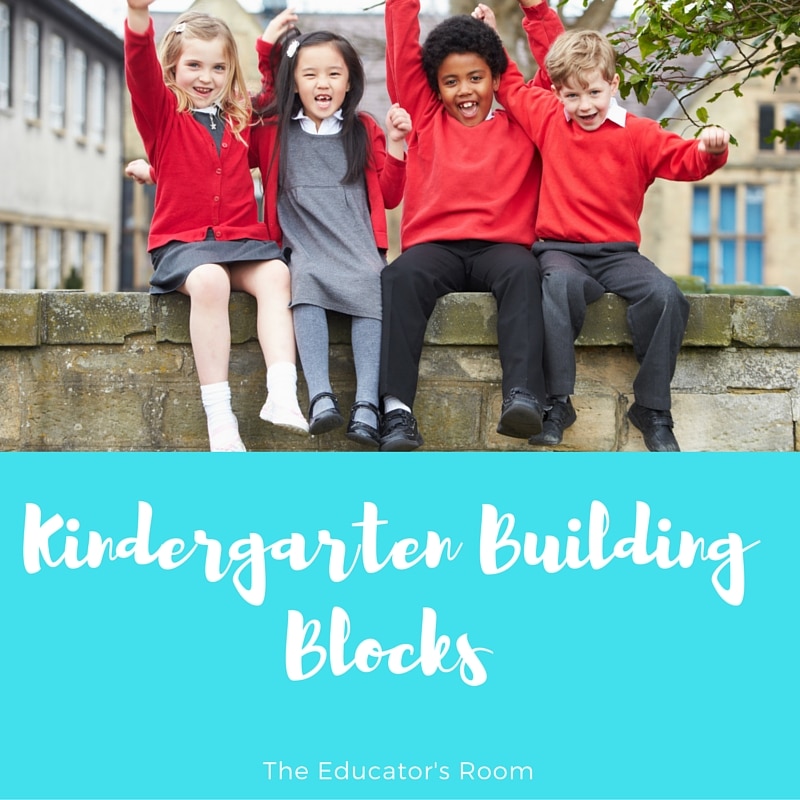
Last week, a friend told me about a principal in my large urban school district who took the blocks out of a kindergarten classroom. There are stories in this district of all play materials, including crayons, being removed from kindergartens. In New York, the story of a principal canceling the kindergarten show made national news. All these changes have been made with the cry of “College and career readiness!” This depresses the daylights out of me.
Since Friedrich Froebel created the first kindergarten in 1837, the goals for teaching these young children have been: free self-expression, creativity, social participation and motor expression. Froebel expected children to learn by using “play as the mirror of life.” It is developmentally appropriate for five-year-old children to experience learning through structured play and experimentation.
[fusion_builder_container hundred_percent=”yes” overflow=”visible”][fusion_builder_row][fusion_builder_column type=”1_1″ background_position=”left top” background_color=”” border_size=”” border_color=”” border_style=”solid” spacing=”yes” background_image=”” background_repeat=”no-repeat” padding=”” margin_top=”0px” margin_bottom=”0px” class=”” id=”” animation_type=”” animation_speed=”0.3″ animation_direction=”left” hide_on_mobile=”no” center_content=”no” min_height=”none”][bctt tweet=”Froebel expected children to learn by using “play as the mirror of life.” ” username=”Educatorsroom”]
Interestingly, the premier private schools, such as the one my mayor’s children or the Obama girls attend, talk on their websites about the belief that preschoolers and kindergarteners develop important skills through active learning and creative play. In fact, play is also mentioned in most of the primary grade descriptions in some form. Hmm.
There are a multitude of reports on why play in important in early childhood learning. This is because children learn best when they have a hands-on experience. It creates relevancy between them and the world in which they live. This includes blocks, housekeeping centers, clay, and the water table. These experiences create the scaffolding needed to help build the ability to be college and career ready.
In Yardsticks: Children in the Classroom Ages 4 – 14, author and developmental specialist, Chip Wood explains: Learning is best for five-year-olds when it is both structured and exploratory: structured through a clear and predictable schedule; carefully constructed interest areas where children can initiate their own activity.
Why have we forgotten about our knowledge of pedagogy? Why have we lost our realization that children need play and that it enhances understanding? It not only supports learning, it is learning. While there are a few people who can jump steps and understand a concept without the structure built by the underpinning, they are far and few between. Are we stealing the underpinnings of our children’s education? I think so.
Let’s look at those blocks in the kindergarten classroom. Whether they are made wood or plastic, they help a child develop cross-curricular skills. They build language that is especially needed by low-income students. Both sentence structure and vocabulary are developed as projects are discussed and described. Think of how many words can be used other than “big” or “little.” These children start school having heard an average of 30 million fewer words than their high-income age mates. You can’t make that up with worksheets.
Math skills are reinforced with blocks as shapes are discussed and sizes compared. Spatial awareness grows. The understanding that three little square block equals a big rectangle is measurement. As blocks balance and fall, the beginning of physical science is grasped. Concepts of gravity and weight become relevant.
Most importantly, the emotional growth that comes with a goal in mind which requires effort to accomplish, perhaps even trying something several ways before it works, is a prize children need. The need it over and over and over. I think Maria Montessori said it best. “Internal satisfaction creates joyous lifetime learning.”
Bring those blocks back! Let’s get joyfully working on being college and career ready.
[/fusion_builder_column][/fusion_builder_row][/fusion_builder_container]