
Have you signed up for The Educator’s Room Daily Newsletter? Click here and support independent journalism!
What is a Military Brat?
Are you familiar with the term “military brat?” This term refers to someone who grew up in a family where one or both parents served in the armed forces. My father served in the Air Force. That makes me a military brat, and I say that with pride. The word “brat” usually carries a negative connotation in the civilian world. But those of us who grew up “on base” know that we belong to a resilient and diverse subculture of individuals bonded by common experience and mutual understanding.
Many military brats find it hard to pinpoint the city or town where they grew up. That’s because most of us rarely live in one place for more than a year or two. Childhood friendships seldom carry over into our adult lives since distance and constant address changes make them difficult to maintain. Growing up, the nuclear family was the centerpiece of our community. At the same time, neighbors and friends on the base stepped in as our extended family since most of our grandparents, uncles, aunts, and cousins lived in other states or in another country.
If your childhood was rooted in one home or you graduated high school with your kindergarten buddies, all of these descriptors may sound unimaginably disheartening. However, for many military brats, these transitional moments positively shaped the way we fit in our wide world. Here are a few lessons from my life as a military brat that informed my educator’s life.
Welcome Change
Surprisingly, my memories don’t bring to mind sadness and struggles with goodbyes. Packing up and watching men load all those boxes onto a moving truck stirred excitement for me. The anticipation of a new house and new friends didn’t leave room for feeling down. My friends and I spoke about the different places we lived and where we were moving to next like adults speak about summer vacation trips. “We’re moving to Guam!” “We’re moving, too. We’re going to Germany!”
Don’t get me wrong, it wasn’t easy to say goodbye, but we knew two things. First, we understood that change was inevitable. By welcoming it, we could look forward to new people and places being added to our lives. The uncertainty of change exists only temporarily, so fear not. Secondly, many times a goodbye can be a see-you-later. For example, my 2nd grader friend who walked me home from kindergarten every day in Japan now lives just 15 minutes away from me in California. In middle school, my sister befriended a boy in California, only to discover that years before they were in the same kindergarten class in Guam. The point? The world is much smaller than we believe. Particularly with the advancements in technology and social media, the vastness of our planet has gotten even smaller from when I was a child.
This annual adjustment to new environments and new groups of friends prepared me to embrace a new roster of students each year as a teacher. Every school year brought that familiar anticipation of meeting new students and their families while embracing perspectives from their layers of identities and histories. Knowing that I would only have one school year with each class made me more intentional about learning who they are, where they came from, and what was important to them so that I can make a meaningful impact. Of course, every school year ended with the wonder of all the possibilities in store for each of my students with the hope that I would see them again.
Difference Is An Asset
For me, accepting others and feeling accepted myself often happens through food and language. Food played a major role in the school cafeteria on a military base. I grew up with many bicultural friends because their moms were natives of countries outside of the United States. Therefore, our lunch boxes across the table resembled an international smorgasbord of deliciousness. Exchanging and sharing the treats in our lunches was more than just trying a new food. In our youthful innocence, we were offering a part of our cultural identity and accepting that of the other. Is this not a beautiful demonstration of vulnerability?
This same transfer of acceptance happened when visiting and playing at friends’ homes. Moms from Japan, Taiwan, Germany, Louisiana, Philippines, and so many other places cooked intercontinental meals which exposed us to diverse communities. Everyone’s house had a different smell. The greetings and terms of endearment made each home sound different. However, the feeling of love and welcome was always the same. I also witnessed mothers who spoke different languages create friendships over food with each other, much the way my friends and I did at school during lunchtime.
This encounter of diversity and affirmation prepared me to implement culturally relevant pedagogy before I even knew what it meant. I simply understood from lived experience that a sustaining community sprouts from sharing, acceptance, and affirmation. These practices can nourish the spirits of all its members. My intention never strayed from this foundational purpose of inclusion and belonging.
Words Support Meaning Making
As a military brat, I found letter writing to be a way to foster stability and connection as my friends and I moved to different parts of the world. I learned how words open opportunities to exchange our thoughts and our daily lives. Words are strong enough to strengthen bonds even when you are miles and miles apart. Words create connections and broaden access to new information.
In my instructional practice, I made every effort to convey the power of words. Writing became a cornerstone across all the content areas in my classroom. In math, I asked students to write explanations of their problem-solving strategies in the form of a paragraph or even a short narrative. In science or social studies, students often wrote letters to and from people, animals, or objects found in the learning content. Using writing throughout the lessons enhanced meaning-making and created opportunities for critical thinking.
Seek Common Ground
Despite all the moving across the globe and adapting to different people, my life never felt disjointed. The stability took hold in the fact that my dad, mom, and sister moved with me. No matter the change, they were always there. They shared the same unknowing and anticipation of change. Home was neither the house nor the things in it. Home manifested in the feeling of love and comfort from my family. In addition, I found home in the other families that also shared the common interactions of unknowing and anticipation. There was an unspoken understanding that though we looked, spoke, and believed differently, our experiences were the same. We, both adults and children, somehow knew to attach ourselves to what we had in common rather than our differences. Family and community reside in the soul of the people within them.
As an educator, I believe this lesson impacted my work the most. I held an inner knowing that I was both teacher and learner in the classroom. I found common ground with my students and their families and opened myself to learn from their funds of knowledge. Each class offered me a chance to become a better teacher and better person than the previous year.
My lived experience and identity as a military brat influenced my instructional practices in ways that education and training could not. How might your lived experiences influence your teaching practices?
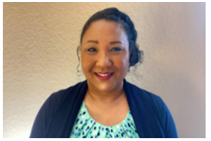
Tina Starks is an educational designer for Student Achievement Partners and an education consultant. She is also a 2021-22 Teach Plus California Policy Senior Fellow.
Editor’s Note: If you enjoyed this article, please become a Patreon supporter by clicking here.