

Overview:
Bob O’Connor’s life and 38-year career in special education exemplify humble, compassionate teaching rooted in patience, resilience, and an unwavering commitment to supporting students with the greatest needs.
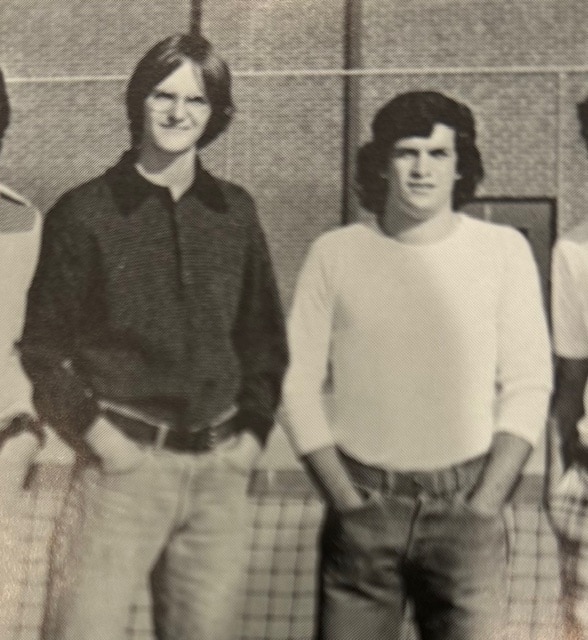
Bob O’Connor and I met during our 7th grade year at South High (a small neighborhood school that included 7th through 12th grades) and became best friends fairly quickly. I immediately liked Bob because of his positive outlook on life, his sly sense of humor, and mostly his family values. Only later did I discover that he was Catholic. I mention this because it has happened to me a number of times – growing close to someone I like only to learn weeks or months later that he or she is Catholic. I was raised as a Presbyterian. My Catholic wife calls me a Catholic wannabe.
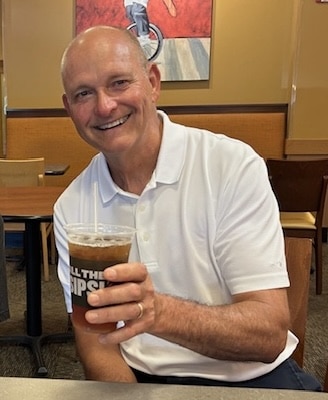
Bob joined Sheila Ray (another dear friend and lifelong educator to whom I’ve already paid tribute) and me on Sunday, July 25, 2025, in Knoxville, at the Panera Bread on Kingston Pike. And, yes, his beverage of sweet tea, meant to be purchased by me as a symbolic gesture of my gratitude for his teaching career, was also given to him by the Panera Bread employee. Having that chance to talk with Sheila and Bob, just the three of us, for three hours is a conversation I’ll treasure forever. At one point, one of us said that we should have recorded the conversation. We recalled pivotal moments in our careers, students and colleagues who’d inspired us. The emotions were raw and real. There is no way I or anyone could capture in writing all that was expressed during our conversation.
Bob is one of fourteen children. When anyone tells a story of a large family, I wait patiently and pretend to be impressed with numbers of children such as eight or ten or even twelve. Then I hit them with the story of Bob’s family to take home the prize. The O’Connor family was one of the most respected in South Knoxville. I loved hanging with them in their large home on the hill not too far from South High. At times, I’d sit down to dinner with Bob’s family, and it would take them several minutes to notice that a non-family member was at the table.

Bob was popular in high school. He was a responsible student, a talented athlete, and had a quiet personality that drew the attention of many of the females in our school. The qualities, though, that made me want to be his friend were his humility and not taking himself too seriously. These are two personality traits that serve great teachers well.
Bob and his wife Renee are dear friends of my wife’s and mine. They’ve raised three sons, all successful in their own fields. The family values that served both Bob’s and Renee’s families during their childhood days have served their own family very well, too. Again, not to toot the Catholic horn too loudly, there does seem to be something about at least the Catholic folk I’ve known that draw me to them.
One of Bob’s older sisters Jody, whom I had met during one of my dinnertime raids on the O’Connor home, was a Special Education teacher. I know there are more politically correct terms for that particular area of education, but that’s what everyone called it in the 70’s. “Hearing Jody talk about the personalities of the children and what she did to help them had a major impact on me,” Bob told me as he sipped on his sweet tea.
Bob earned a B.S. degree as a Generalist in Special Education at the University of Tennessee in 1980. He soon landed his first position as a Resource Teacher at Norris High School in Anderson County, TN. He then moved to Anderson County High School, again as a Resource Teacher. For three years, he served as an alternative program teacher in Clinton Junior High’s Comprehensive Development Classroom, a designation perhaps unique to Tennessee schools. Bob had immersed himself so deeply in working with students with special needs that he was then working with young people with the most severe disabilities.
During high school, we at South were not exposed to students with special needs for any significant length of time. Other than through his sister’s influence, where did Bob gain this interest in teaching such students? In my forty-three years of teaching, I never considered working with children with special needs. Burnout rates among educators are among the highest of any profession, and that rate is especially high among teachers who work with this population. By the time Bob left Clinton Junior High to take a position as a Resource Teacher at Linden Elementary School in Oak Ridge, TN, he had been teaching for seven years. He earned an M.S. in Special Education from UT in 1988.
After two years at Linden, Bob took a position at Robertsville Middle School in Oak Ridge where he would remain for the next twenty-nine years. All twenty-nine of those years would be as a Resource and Comprehensive Development Classroom teacher. He wasn’t burning out. He was hitting his stride. After his sister’s inspirational spark, he found additional inspiration over the years from his memories of numerous great teachers during his South High School days. “Nothing specific, necessarily. Just the way they carried themselves, how thoughtful they were. What my students needed more than anything else was someone who cared, someone who would be patient with them. I remembered teachers who wouldn’t give up on us. I wasn’t going to give up on my special needs students.”
What I didn’t know about Bob until he told me that day in Knoxville is that he had earned an Ed. D. in Curriculum and Instruction from UT in 1991. Did I mention he was humble? Not only had Bob never given up on the population of students who perhaps need great educators the most but he’d also become a doctor of education at which point he also became an adjunct professor. In this role, he taught summer classes and night classes from 1993 to 2013 to students wanting to earn their special education endorsement. “I felt it was important to give back to UT in this way, and I’m really happy that I was able to help those college students who were in the same shoes I once was in.”
When he retired from teaching in 2018, he’d worked with students with special needs, sometimes with the most severe special needs, for thirty-eight years. That’s probably not a record, but, from my perspective as a teacher of students who did NOT have the types of significant special needs that Bob saw day in and day out, I tip my hat to him. I could not have done what Bob did for our society for even a few years. There are those of us who have hopefully made significant differences in the lives of our students, but then there are human beings like Bob who with very little recognition have met the needs of young people who have to overcome every day so much more than we can even imagine.
Bob underestimated that challenge at first. A college education and a little supervised training in a classroom prepare teachers only to a certain point. Any teacher will tell you it’s different when it’s your classroom, and you’re solely responsible for the students’ wellbeing. Bob was frustrated during his first year and definitely second-guessed his decision to become a teacher. He credits his amazing, dedicated co-workers for helping him hang in there. “And then I found some success with a few students. I can’t describe how great that felt, and that kept me motivated. Those successes happened often enough to keep me going.” Bob also coached softball, track and cross-country, which gave him a chance to have an impact on students who weren’t in his classroom.
As to whom Bob would visit on his own gratitude tour, Dr. Jean Schindler was top on his list. That first day he walked into the School of Education at UT in 1975, he asked another student for advice on who to choose as an advisor. That student told him to stay away from Dr. Schindler because she had a reputation for being strict and even mean. In typical Bob fashion, he chose Jean as his advisor. She became his major professor and advisor throughout his time at UT as well as his teaching career until her passing in 2018. “She made all the difference in the world for my life and career. Yes, she had strong opinions, but she was always encouraging to me. I am forever grateful and hope I said thank you enough.”
One of those times she gave support to Bob was when he nearly found himself without a position in education. He had resigned his current teaching position to become the principal at a school for students with severe mental health issues and who had been placed in the legal system. Suddenly, that position was no longer available. During that stressful time of re-applying for his previous position and hoping they’d take him back, Dr. Schindler was there for support. Fortunately, his previous school did take him back, and all continued to go well in his career.
Bob was never one to shy away from a challenge. In his final eight years of teaching when he might have been looking for ways to make his days in the classroom a bit easier, he switched to a Comprehensive Development Classroom to work with behaviorally challenged students. They and their families were out of options educationally. He called on his previous thirty years of experience to make a lasting impact on their lives beyond school. Understandably, he’s particularly proud of that.
As he pondered the direction in which education is heading in 2025, he noted that students and the education system seem to be heading in opposite directions. As expectations become more sophisticated, students appear to be less and less equipped to handle that trend. Our so-called advancements aren’t making life easier for young people. They are, instead, exposing them to information overload and expecting them to keep up with technological advances at rates beyond their capabilities. Meanwhile, home and community support seem to be inconsistent at best or even completely lacking in some cases. Students today need emotional and mental health support more than ever as technology continues to infiltrate every aspect of their education. Bob sees it this way. “We need to take a closer look at individual students and make better decisions as educators as to how we are impacting their lives. The area of technology is a major concern. It’s a powerful tool that needs to be wielded with more caution than is currently employed.”
I agree with Bob. I’ve trusted his kind heart and wisdom for over fifty years. What will be in store for our young people in classrooms tomorrow? We can only hope they will be filled with educators such as Bob, who has always led with love.


I too grew up with Bob, Dan, and Sheila. I left town right after HS graduation and lost touch with most of the people with whom I went to school. Four years later I came back to Knoxville. My career took me in different directions as my former classmates, as I suspect is true for most of us. Over the ensuing years, I would hear about these three wonderful people and their choices to become educators. I will say I was not surprised at that news as each of them were what we used to call good people. They always carried a smile through the day, were supportive of others and I do not recall anyone having anything negative to say about them, ever. That fact to me, is a testament to their inner selves. Good people. Now, so many years later, to see Dan paying tribute to Bob and Sheila, I find once again, I am not surprised. Good people do not stop doing good things. Giving back. It gives me a sense of pride to have been in their circle, even if for a short while, so long ago.
Goodness, Mark. Such kind words. Thank you! We were lucky, I think, to attend a small neighborhood public school, 7-12. You were (and still are) one of those good people, too. Our school was full of them!
Dan, your stories, so eloquently written, are heartwarming and inspiring. Thank you for taking time to tell the world about these wonderful teachers, these “good people” whose life work so nobly touched countless students and made our world a better place. Your stories encourage me to try harder to be more patient, more humble, and a better grandfather and senior citizen.
Hello Phil! Thank you, thank you, thank you for your kind words. You were one of those wonderful teachers and still are a “good person.” My best to you and Claudia. I know you enjoy time with your grandchildren as much as Merf and I enjoy being with ours.