
Overview:
Kelly Chung’s decades-long career as an unconventional, deeply relational educator—affectionately known as “Aunty Mom”—is defined by her commitment to student growth, cultural understanding, and personalized teaching that prioritizes care, trust, and real-world impact over traditional metrics.
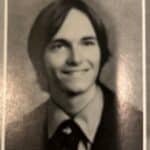
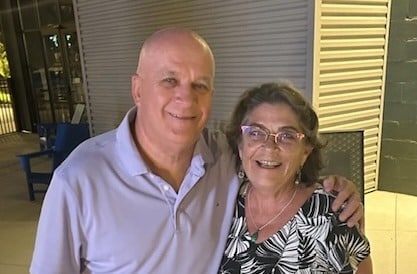
“Aunty Mom” is what her students affectionately call her. My wife Merf and I called her Kelly throughout our high school days. Kelly is one of my wife’s best friends. That creative spelling of my wife’s nickname comes from Kelly. My correspondence with Kelly in the months after I saw her in Knoxville last summer made me thankful that she became a career educator. Kelly has spent her life bucking trends – bucking them in a good way because they weren’t right or at least not right for Kelly. I’d like to think I did that at times as well.
My South High School Class of 1975 invited members of the classes of 1974 and 1976 to our recent 50th reunion in Knoxville on Saturday, July 19, 2025. Kelly and Merf are proud members of the South High School Class of 1976, the last class ever at that storied facility. How blessed were we that Kelly traveled all the way from Hawaii to see everyone. After the reunion, a small group of us met at the old Kerns Bakery in South Knoxville, which is now called Kerns Food Hall. I had several opportunities to purchase Kelly a beverage of her choice that evening, but, alas, I was so excited to be talking to her that I forgot that part of the deal. My gesture of gratitude would have to happen in a different way. She would sip, take a picture, and I would send her a check. That sip happened on September 23, 2025. It was a bottle of Louis Jadot Beaujolais-Villages.
After graduating from South High School in 1976, Kelly attended Oral Roberts University (sent by her father) but lasted only one year as she simply was too free-spirited for that environment. In many ways, we who were raised in South Knoxville in the 60’s and 70’s were not privy to the diversity of cultures and ideas in the real world. Kelly wanted to experience that diversity and explore those ideas. She had visited Europe after her 7th grade year so she knew there was a lot more to learn about cultures outside of the US. It would eventually serve her well in her teaching career.
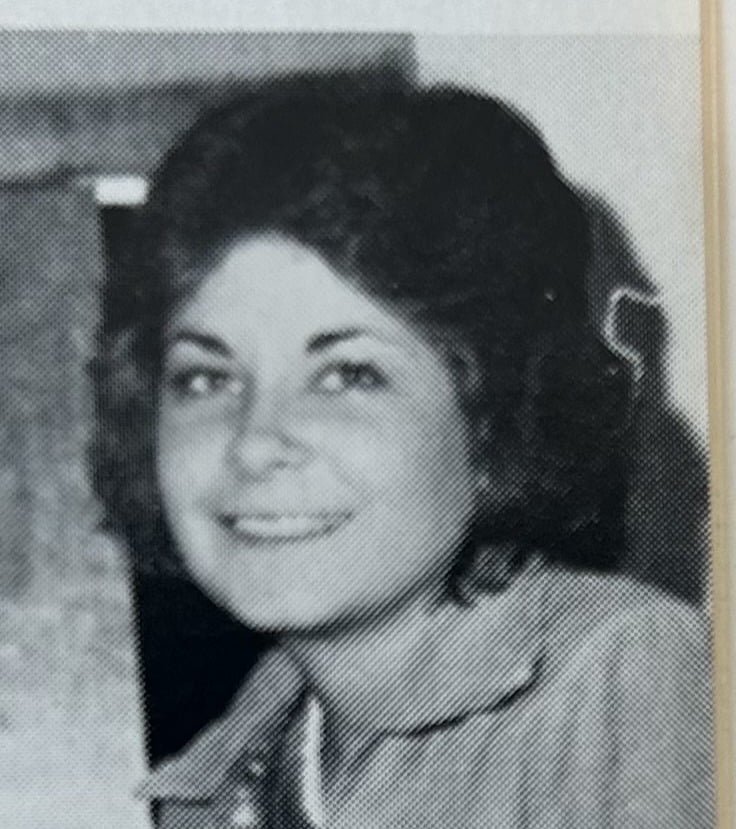
After a short return to Knoxville followed by several years in Atlanta, GA, where she worked as a hair stylist’s apprentice, she decided in 1980 that she wanted to try Hawaii. She’d once vacationed there and had met some kind people in the art community. Her parents didn’t know she had purchased a one-way ticket. She reconnected with her artist friends, who gave her a place to stay until she found employment in the Hyatt Kuilima (now the Ritz-Carlton O’ahu) on the North Shore of Oahu. There she met a youthful bartender and local boy Peter Chung. They married in 1981. Peter was instrumental in helping Kelly’s parents appreciate Asian and Hawaiian cultures. Two eventual children and one grandchild would also help them understand that the blending of cultures could be a beautiful thing.
Kelly’s life was just as she wanted it, and now she could pursue the career she’d always wanted – teaching. She’d had excellent role models. At South, three teachers stand out as inspirations: Vicky Andrews, Fred Ridinger (one of my inspirations as well), and Jerry Harris. Mrs. Andrews encouraged Kelly to read for pleasure in addition to her educational reading. To this day, Kelly is an avid reader of social and political literature, but she also reads just for fun. Mr. Ridinger encouraged her to pay attention to how various governments worked, especially the US government. During Watergate, he even rolled an old black and white television from the AV closet into the classroom so his students could watch the hearings. I had admired how he was always precise about what he taught and completely clear about what would be on quizzes and tests. Kelly still stays in touch with Mr. Harris. He now lives in Nashville, TN. During one of her future visits to Tennessee, she hopes to visit him. For now, they stay in touch frequently online to talk about life and to discuss sociopolitical matters. “He would definitely be my first stop on my own gratitude tour. He still inspires me, and our talks about the state of the world and our own country are exactly what I need right now.” It seems that great teachers never really stop teaching, even in retirement.
At every stop in her educational development, Kelly has found inspiration. At Maui Community College a gentleman English professor by the name of Mr. Pelligrino pushed her hard to further develop her writing skills. He emphasized organization, word choices and proofreading/editing, thesis development and follow-through to conclusions. At UH Hilo, Dr. Will Keim (International Relations and general political science prof) and Dr. Rick Castberg (Pol Sci advisor and professor of Criminal Justice) were instrumental in not only helping her shape her opinions but in researching the information that would support and/or debunk class-assigned readings and debate material. Many times these professors validated her research and writing by using her findings as examples in their lectures. Kelly is truly one who appreciates her mentors.
Kelly began her teaching career in 1995 at St. Joseph, a small Catholic school (PK-12), where she taught 5th and 6th grade general math, English, reading, and physical education until a nun took exception to her sometimes-unconventional ways of instruction. She was “let go” after only two years. Her effective strategies, though not the norm, were validated in a big way that same year when her former elementary students spoke with the high school principal and asked that he consider her for an open social studies position.For the next twenty-three years at that Catholic School, she taught 7th and 8th grade English and American history as well as high school level American government, and social studies/humanities electives such as international relations, psychology, sociology, world geography and cultures, life skills, and occasionally Hawaiian history.
Soon after 1997, Kelly’s son transferred to her school. It was around this same time that she became “Aunty Mom,” at first with students who were friends of her son but eventually with everyone. She was known as that teacher who took a personal interest in them. Yes, she pushed them to do their best, but she also listened to them. They knew they could trust her. “Of course they knew I’d report unacceptable situations, but a lot of what they needed to talk about could remain confidential. They appreciated that I could keep a secret but knew I had to report what needed to be reported.”
Kelly also began working with the youth ministry in the School. She attended every three-day, two-night senior retreat for twenty-three years. It should be noted that Kelly isn’t Catholic. I can relate to teaching in a Catholic school as a non-Catholic as well. Kelly agrees with me that there was much to learn each day. During those retreats, her learning curve was particularly steep. Students and fellow faculty appreciated her willingness to learn about Catholicism, her respect for their branch of Christianity, and her never-ending desire to help young people.
In the classroom, Kelly was academically demanding but prided herself on having fun. She was an “actor on stage,” never giving what she considered time-wasting desk assignments. Activities at the end of the period were meant to spark further discussion among the students so students were often times debating as the bell rang. She stayed away from multiple-choice or fill-in-the-blank questions on quizzes and tests. She asked essay questions, instead, because she felt those gave students the best chance to tell her what they had learned. She gave feedback for every single response so she became known as the teacher who took the longest to hand back assessments.
She also bucked the grading system from time to time, especially for students who she considered savant. Kolohe was one of those students. She’d taught him since he was in 8th grade. He never gave written responses – ever. He had failed nearly every written test he’d taken. He’d even been removed from the School for an entire semester for breaking the drug policy. Kelly took the time to see talents in Kolohe that no other teacher cared to consider. She knew that Kolohe’s verbal responses were always spot on so that’s how she assessed him. He didn’t fail Kelly’s class. She also knew he had a big heart. As she would often walk early in the morning, she’d hear his “beep beep” as he drove past her in his pickup truck loaded with weed eaters, lawn mowers, shovels and other “earthy” tools. That was his way of earning some spending cash during his high school years, but he wouldn’t charge those who couldn’t afford it for yard work and gutter cleaning.
Kolohe’s mother came to Kelly about three months before graduation. If her son somehow managed to graduate on time, what would he do with his life? Kelly reassured his mother not to worry about Kolohe, that he was passing her class because he was so strong verbally. She also told her about his generosity with those for whom he worked. “I told her that, even if his grades didn’t reflect it, he was a determined young man and that he would likely find great success after high school.” Kolohe is, in fact, doing very well for himself these days.
In 2009, Kelly was asked to oversee disciplinary actions (in addition to her teaching). Her new position involved “sit downs” and assigning appropriate disciplinary actions for inappropriate behaviors. Kelly viewed the sit downs as additional opportunities to connect with students. She realized that the students she saw had rarely been given permission or even the vocabulary to talk about their feelings of anger, depression, confusion or just feeling out of the loop socially. Not one of those students ever left her office without hearing Kelly praise them for at least one of their positive qualities. This wasn’t always a popular approach among the other teachers, who often just wanted the students to be punished. “I had to educate the faculty as well. I reminded them that they were young once and probably at some point in their schooling wished a teacher had been more encouraging.”
Project-based learning became a rage in education after both Kelly and I had been at it for a while. It’s scary at first because, if it’s done correctly, the teacher has little control over the outcomes, and great teachers don’t want their students to fail. Inherent in project-based learning is the very real possibility that a group of students may fall on their own swords. Kelly was able to eventually embrace project-based learning, which she feels improved her overall instruction. When technology was involved, she often relied on her students to figure out those aspects of the projects. “Everything I know about a computer I was taught by an eager 8th grader determined to gain some bonus points!” Her willingness and ability to adapt to trends in education are definitely factors in her staying power.
Kelly taught fulltime for twenty-four and a half years. In June of 2020, however, Kelly lost that fulltime position due to a financial reorganization at St. Joseph, something that unfortunately happens in small Catholic schools. She was devastated. She’d been at the lead of saving her little school. She was told the news one afternoon while she was handwriting thank-you notes to donors who had either pledged money or who had already sent checks to offset her school’s debt. Word spread quickly. This is when a number of incredible and well-deserved acts of kindness came to Kelly. Past students, recalling how she’d built up their confidence and self-worth, sent cards of appreciation and support during that desperate time. To this day, she is met with hugs and words of gratitude for how she shaped their lives when she sees former students in Hilo. There is no greater reward for a teacher.
Two years after Kelly’s dismissal, a former colleague convinced her to try substitute teaching at Kamehameha High School. Reluctant at first, she has found it to be a god-send. Several of her former students are now attending Kamehameha, and they have spread the word quickly that “Mrs. Chung is HERE! You’re going to love her, especially her accent!” She is called often because the social studies and English teachers know she will follow their lesson plans, and the students know she will care about them.
Kelly has also begun tutoring at the college level, in part inspired by her husband’s grandniece, who has debilitating dyslexia. Kelly wouldn’t allow her to call dyslexia a disability. Instead, they called it a difficulty to overcome. When her grandniece transferred back to Hawaii from Oregon to obtain disability accommodations, Kelly helped her earn a BA in communications. She is now set to begin the third semester of her master’s program. Kelly never misses a chance to shine a light on her husband’s grandniece as well as her own former students. For example, one is now Hawaii’s County Prosecutor. Another has been elected and re-elected several times as a County Council member. These and others have found significant ways to give back to their communities.
Never to shy away from expressing an opinion, Kelly has the following to offer about the direction of education today. First, it’s a great policy to ban cell phones from classrooms. She knows the cons far outweigh any pros of their being in students’ hands during the school day but also sadly admits that emergencies such as school shootings challenge the banning of cell phones. Her rules were as follows: When you enter the class, take it out of your bag, pocket, backpack…turn it off and place it upside down on the desk. Sometimes she’d allow her students to check their phones during the last five minutes of class, BUT, if it was used during lectures, films or work time, she took it and held it until the last bell. If a second offense occurred, she turned it into the office so a mommy or daddy could pick it up at their convenience…IT WORKED! Kelly was a bit ahead of her time with cell phones as many schools today are adopting rules to curtail usage during classroom hours.
She goes on. Students need planned but casual socialization time in addition to academic time. “Hawaiian, Filipino, Japanese, Chinese, Korean, Caucasian, and a variety of Pacific Island students have been in my classes. I love that diversity! There has been little time during the day for these students to get to know their similarities and appreciate their differences so I’ve always built it into my lesson plans.” She feels it wouldn’t hurt to bring back trade schools and internships as well. Kolohe would certainly have benefited from attending a trade school. Her greatest concern, though, echoed by many of us who have witnessed how technological advances have impacted education, is that the impact hasn’t typically been positive. We’ve been wrongly convinced that online applications are somehow more effective in delivering knowledge/wisdom than interactions with human teachers. They aren’t. And now there is a real concern that AI programs (artificial is in the name) will continue to dumb down young people.
To those considering the profession, Kelly reminds them that teaching is not easy. One must truly love the students. Notice that Kelly doesn’t mention anything about needing to be book smart. In fact, one of her favorite slogans is, “Children don’t care how much you know until they know how much you care.” Kelly became that teacher whom students would seek for advice or a little love and understanding. In those times when she became frustrated with school “politics” or exhausted by unreasonable colleagues or parents, the love of her students re-energized her. When with her students, Aunty Mom never regretted a day of her career.