
Overview:
Jessyca Mathews is an educator whose work centers on empowering students to use their voices to confront injustice, drawing from her own experiences to create a classroom rooted in truth, advocacy, and courage.
For Jessyca Mathews, education has never been just about teaching literature or preparing students for exams. It has always been about something deeper: helping young people find their voice and use it to change the world.
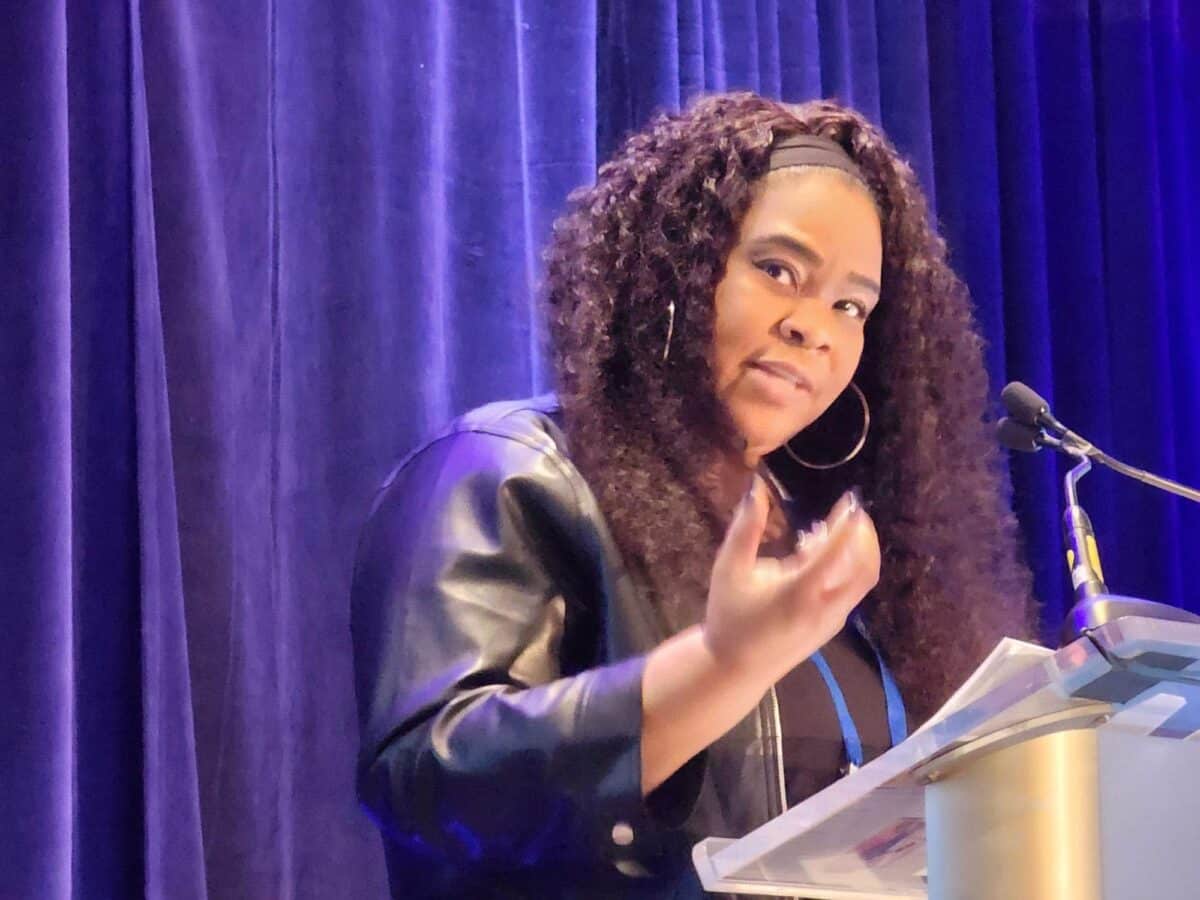
An English and AP African American Studies teacher at Carman-Ainsworth High School, Mathews has built a national reputation as an educator who refuses to separate learning from justice. As a member of the second cohort of the Top 50 Educator, in Jessyca’s classroom, students read, write, research—and most importantly—learn how to speak truth in spaces where silence has too often been expected.
Becoming the Teacher She Never Had
Mathews’ journey into education wasn’t part of a lifelong childhood plan—at least not for her.
But someone else saw it clearly long before she did: her father.
When she was in the fifth grade, he began telling her she would one day become a teacher. At the time, she brushed it off. Yet by her sophomore year in college, she began to recognize what he had seen all along.
More importantly, she realized why she needed to teach.
Growing up, Mathews never had a Black teacher throughout her K–12 education. Although she enjoyed school, something always felt missing. She often encountered stereotypes and microaggressions in a predominantly white educational environment, and she rarely saw her lived experiences reflected in the classroom.
So she made a decision that would shape the rest of her career:
She would become what she never had.
“I am what I didn’t have,” she says—a statement that has guided her work for more than two decades.
When Education Became Advocacy
Mathews’ commitment to teaching reached a new level during one of the most devastating crises in modern American education: the Flint Water Crisis.
As Flint residents faced poisoned water and government neglect, Mathews listened to her students describe what they were experiencing: hair loss, illness, fear, and anger. Their lives were being shaped by a public health catastrophe—and yet traditional classroom instruction continued as if nothing had changed.
That moment forced her to rethink everything about her teaching.
Instead of avoiding difficult realities, Mathews turned her classroom into a space for liberatory education—a model focused on helping students understand injustice, research it, and advocate for change.
Inspired by the work of scholars such as Barbara Love, Mathews began designing lessons that allowed students to investigate real-world issues affecting their lives and communities. Her seniors now research social justice topics, develop arguments, and speak publicly about the changes they want to see.
For Mathews, the goal is clear: education should help students find the power in their own voices.
Speaking Truth—Even When It’s Uncomfortable
Of course, speaking truth in education doesn’t always come without consequences.
As Mathews introduced conversations about social justice, equity, and systemic injustice into her classroom, she faced pushback from critics who labeled her work as “too outspoken,” “too aggressive,” or “too militant.” Some parents even removed their children from her classes.
But Mathews never considered retreating.
Instead, she holds close to a quote from Zora Neale Hurston that shapes her philosophy: “If you are silent about your pain, they’ll kill you and say you enjoyed it.”
For Mathews, silence is not an option. Teaching students to speak up, challenge injustice, and demand a better world is not political theater—it is the very purpose of education.
A Teacher Whose Voice Reaches Beyond the Classroom
Mathews’ influence now stretches far beyond the students she teaches each day.
After being named Michigan Region 5 Teacher of the Year for 2019–2020, her platform expanded dramatically. That recognition opened doors for her to share her work nationally through writing, speaking engagements, and educational leadership.
She has been featured in major outlets such as MSNBC, Time Magazine, NPR, and The Washington Post, where she has written powerful opinion pieces about race, education, and justice.
Her voice has also reached thousands of educators through keynote speeches and conferences, including one of her largest audiences at Learning Forward, where she spoke to more than 3,000 educators from across North America.
But even with national recognition, Mathews maintains the same philosophy: teaching does not stop at the classroom door.
Advice for Educators in a Difficult Time
With teacher burnout reaching crisis levels across the country, Mathews encourages educators to rethink how they sustain themselves professionally.
Her advice is simple but powerful: find your circle.
Not just colleagues at your school—but a broader community of educators committed to meaningful work and professional growth. Whether through conferences, online networks, or collaborative learning spaces, Mathews believes that strong communities of educators help sustain courage when resistance appears.
Because resistance, she says, is inevitable when you are doing important work.
Imagining a Braver Future for Education
If Mathews could redesign American education tomorrow, she would start by giving teachers more control over curriculum.
Too often, she argues, schools cling to nostalgia—teaching the same texts, maintaining the same structures, and repeating the same systems simply because “that’s the way it has always been done.”
But nostalgia, she warns, can be dangerous.
Students deserve to see themselves in the curriculum, to encounter diverse perspectives, and to engage with ideas that reflect the complexity of the world they are inheriting.
True progress in education will require educators willing to question old traditions and imagine something better.
A Legacy of Courage—and Joy
After more than two decades in the classroom, Mathews hopes her legacy is not simply remembered through awards or accolades.
Instead, she hopes future educators and students carry forward something far more powerful: permission to be courageous.
She wants them to speak with authority about their histories, their identities, and their truths. She wants