
Overview:
A PYP teacher describes how a simple daily "amazing body fact" routine sparked genuine curiosity that transformed a human body systems unit into student-led, collaborative inquiry
“‘Can we have today’s body fact before we start English?'”
That became one of the most common questions in my PYP 3 classroom. What started as a five-minute routine unexpectedly grew into the heartbeat of our How the World Works unit and changed the way my students approached learning about the human body.
Like many teachers, I had previously introduced body systems by explaining each system, discussing its organs and then asking students to complete activities that reinforced the concepts. While students remembered interesting facts, I noticed they often struggled to explain how different systems worked together or why they were important. More importantly, they were waiting for information instead of actively seeking it.
I wanted to shift that balance. Rather than positioning myself as the expert with all the answers, I wanted my students to become investigators who asked questions, searched for evidence and shared their discoveries with one another.
That decision led to one simple classroom routine: The Amazing Human Body Fact of the Day.
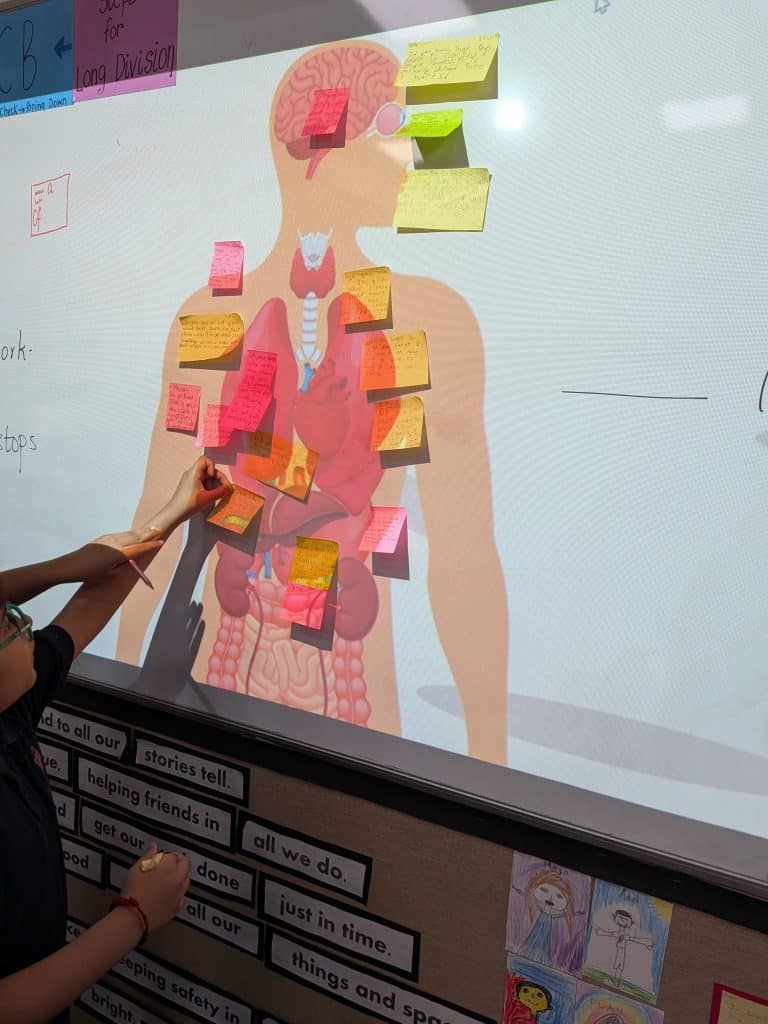
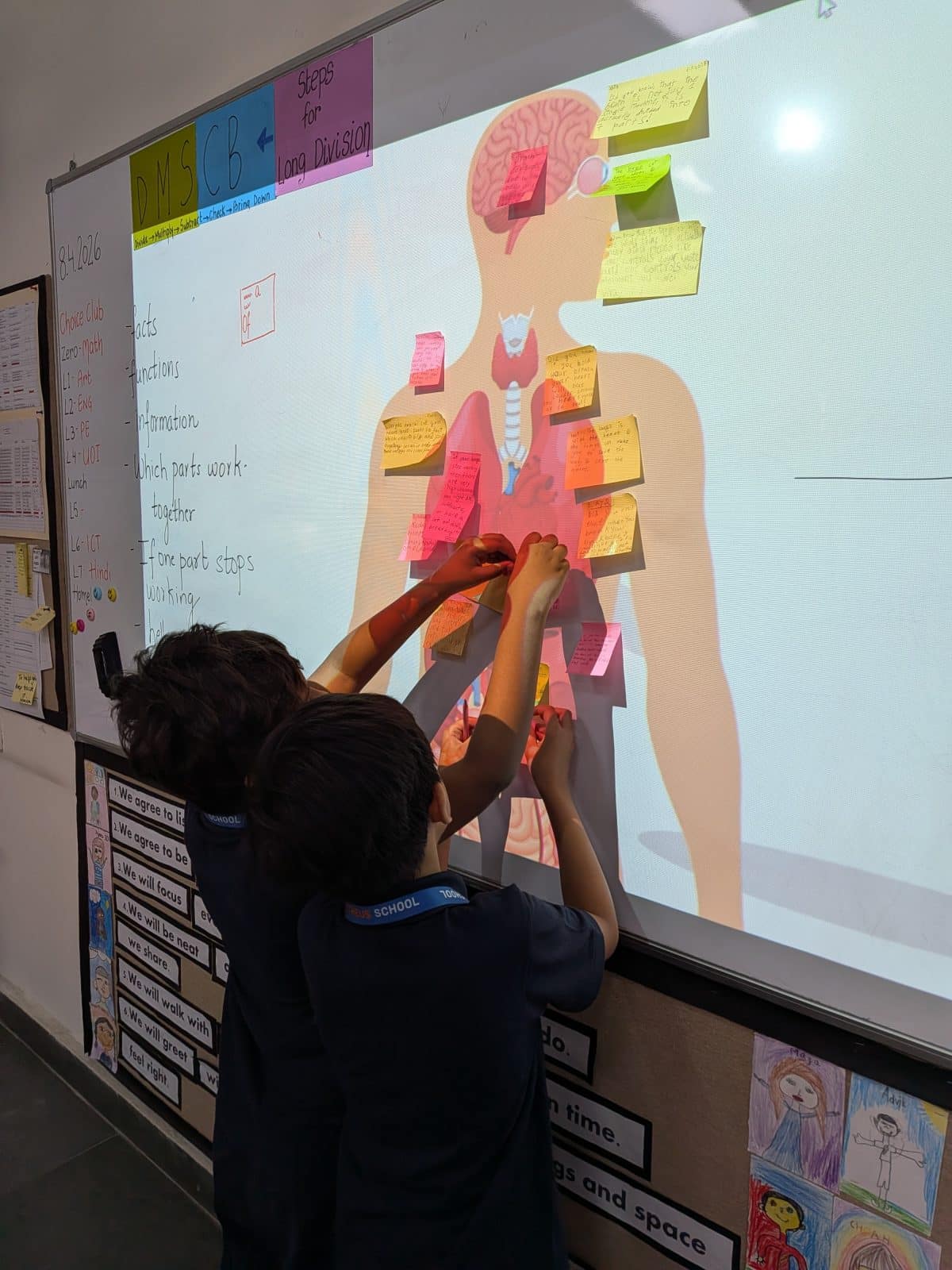
Each morning began with a surprising fact projected on the board.
“Your heart beats about 100,000 times every day.”
“You produce enough saliva in a lifetime to fill two swimming pools.”
“Your bones are constantly rebuilding themselves.”
Before anyone reached for a book or a device, students were encouraged to think. Was the statement believable? Why might it be true? Could they explain it using what they already knew?
These conversations rarely ended after five minutes. They spilled into transitions, lunchtime discussions and even conversations at home. Students began arriving with facts they had discovered themselves, often eager to challenge the class with questions of their own. Curiosity had become part of our classroom culture.
Kath Murdoch (2015) describes inquiry as beginning with genuine wonder, and that is exactly what I saw happening. The daily facts were no longer just interesting pieces of information; they became invitations to investigate.
Once students had developed this sense of curiosity, they worked in teams to explore one body system in depth. Each group focused on a different system, including the digestive, respiratory, circulatory, skeletal or nervous system. Using books, teacher-selected websites and classroom discussions, they gathered information, compared ideas and decided how best to communicate their learning to others.

Instead of completing identical worksheets, every team made different choices. Some built simple models. Others designed labelled diagrams or visual presentations. Their challenge was not simply to collect facts but to teach their classmates in a way that made the learning meaningful.
As I moved around the classroom, my role gradually shifted from instructor to facilitator. My questions changed too. Instead of explaining concepts, I found myself asking, “What evidence supports that idea?” or “How does your system depend on another one?”
One afternoon, I watched a student ask a question about oxygen transport. Before I could respond, another child said, “Let’s ask the circulatory team—they researched that.” It was a brief exchange, but it showed something significant. Students were beginning to value one another’s expertise rather than relying solely on the teacher.
This kind of collaborative learning reflects Vygotsky’s (1978) belief that understanding develops through interaction with others. As students discussed, questioned and refined their thinking together, they built knowledge collectively rather than memorising isolated information.
The impact of the inquiry became increasingly visible as the weeks progressed.
Students who had once been reluctant to contribute during discussions confidently explained how body systems interact. Scientific vocabulary that initially felt unfamiliar became part of everyday classroom language. Instead of describing the body as a collection of separate organs, students talked about systems working together to keep us alive.

The learning also extended beyond the classroom. Families shared stories of children discussing body systems during dinner or looking up additional information at home. Several students proudly arrived each morning ready to share another fascinating fact they had discovered overnight. Their enthusiasm demonstrated that learning had become personally meaningful rather than something confined to school hours.
Throughout the unit, I collected evidence through observations, student reflections, research journals and presentations. Comparing students’ initial responses with their final explanations revealed much deeper conceptual understanding. They were no longer recalling isolated facts; they were making connections, asking thoughtful questions and explaining ideas with greater confidence.
Research suggests that students learn more deeply when they actively construct understanding and engage in meaningful dialogue (Hattie, 2023). Looking back, I believe the most powerful aspect of this unit was not the activities themselves but the environment they created. Students felt safe to wonder, investigate, disagree respectfully and learn from one another.
This experience also reminded me that inquiry doesn’t always require elaborate resources or complex lesson plans. Sometimes, it begins with a single question or an unexpected fact that encourages children to look a little closer at the world—and themselves.
Months after the unit ended, students still stop me in the corridor to tell me something new they have learned about the human body.
For me, that is perhaps the greatest measure of success. The facts may eventually fade, but the curiosity that inspired them continues to grow.

References
Hattie, J. (2023). Visible learning: The sequel. Routledge.
International Baccalaureate. (2018). Learning and teaching. International Baccalaureate Organization.
Murdoch, K. (2015). The power of inquiry. Seastar Education.
Vygotsky, L. S. (1978). Mind in society: The development of higher psychological processes. Harvard University Press.