

Overview:
An IB teacher shares how collaboration, flexibility, and innovative intervention strategies transformed a diverse, multilingual student body into a thriving community of learners committed to equity and excellence.
Starting a new program is every educator’s dream and nightmare. You get to design everything from scratch—but you also carry the weight of every decision. In 2016, I embraced one of my greatest challenges yet: becoming the MYP Language Teacher and Head of the English Department at a new International Baccalaureate (IB) school in Amman, Jordan. While I had previously held leadership roles, this opportunity was unique—a blank canvas waiting to be filled. The thrill was intoxicating, but as I soon discovered, I had overlooked several crucial aspects of this undertaking.
Context Matters in International Baccalaureate
Our school was a girls’ institution in a region where English is primarily a second language. Despite this, the decision was made to offer Language and Literature as a course—an ambitious goal that seemed, at first, like an impossible dream. Yet, through hard work and collaboration, my team and I spent three years crafting an English language program that not only honored our students’ cultural contexts but also adhered to IB educational philosophies.
The Challenge of Diverse Backgrounds
As a newly established school, we welcomed students from a myriad of educational backgrounds, including both IB and non-IB schools. This diversity presented an unexpected challenge. We had assumed that teaching English would be straightforward, but we quickly realized our misconception. Our students arrived with varying degrees of language proficiency; some were enrolled in Grade 8 (Year 3) of the MYP and had minimal English skills. One of these students, who initially struggled, would later become a remarkable success story. However, once we understood how varied our students’ backgrounds were, we had to rethink what support looked like—and fast.
Adapting to Learner Needs
Initially, we focused solely on Language and Literature, but it soon became clear that we needed additional support to cater to our students’ diverse needs. The question loomed: how could we bridge the gaps in knowledge and skills without overwhelming students, teachers, or the school timetable? And definitely, without driving our teachers away.
Our school day ran from 8:00 AM to 3:00 PM, with two breaks and an early morning session from 7:45 AM to 8:00 AM. To address the urgent need for intervention, we decided to implement 30-minute intervention classes aimed at developing essential skills tailored to each grade level.
This is not easy as it challenges and reshapes your beliefs and values. All of a sudden, our perception of a student’s school day changed. Our school’s timetable had to be shifted. Instead of setting a timetable offering only courses, we started understanding that the timetable is one way to structure students’ learning and the support provided by the school’s community. It was a path to success. This experience reminded me that teaching equity isn’t just about fairness—it’s about redesigning systems to fit the learner, not the other way around.
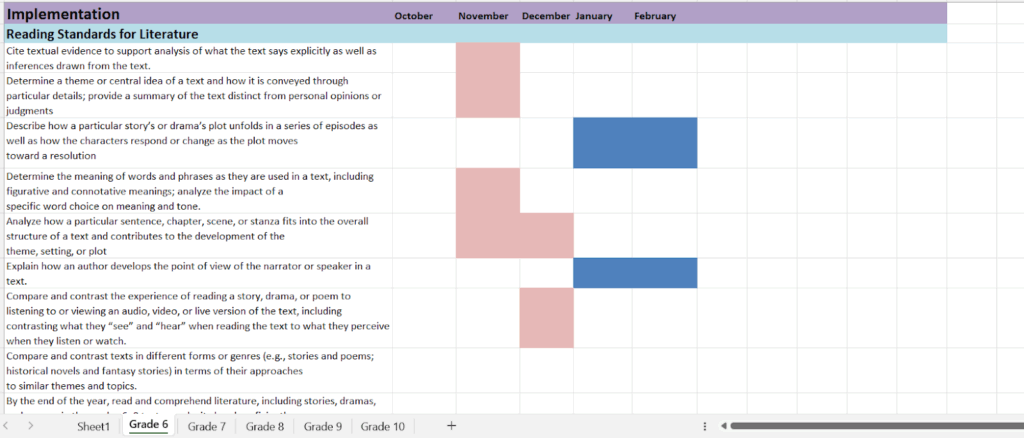
The power of Excel emerged. Using a simple tracking document, we monitored students’ skills over time—a tool that became central to our intervention success and our monitoring and reflection tool.

We introduced intervention classes in the morning time for four days and maintained a homeroom session where students engage in discussions and conversations with their wellbeing teachers. We also added a wellbeing session once a week where teachers check-in on students making sure they are balancing their social life and activities while studying. The balance is challenging yet it was a priority.
Finding Learning Spaces in International Baccalaureate
Finding appropriate locations for these classes was a challenge, yet it reminded us that any room with tables and chairs can be a learning environment. We distributed students across various spaces: the library, meeting rooms, and our MYP classroom areas with mobile classrooms. The idea was to group students by proficiency level and rotate teachers based on key essential skills. Before proceeding, I sought approval from our management team, who emphasized the importance of culture and parental perspectives. The alternative methods we proposed required more teachers than we initially had.
Although our original plan was to group students according to their levels, this quickly evolved to accommodate different levels within various grade levels. The priority was: who could be merged? How could we allocate our teachers effectively? Despite our best efforts, we faced limitations in staffing, leading us to re-evaluate our approach.
This was the hardest lesson to learn. Not all theoretical plans are applicable. From that day on, I always consider a 360 perspective when submitting plans. Is it applicable for teachers? Parents? Students? Management? What resources are available? How would we know that we succeeded?
Implementing Intervention Strategies
With all these challenges, we were still able to adapt and show our flexibility as a team. Plans, resources and execution were edited. We communicated our plan to the administration: intervention classes based on diagnostic tests to address knowledge gaps through 30 minutes of explicit teaching. Students were enrolled based on their diagnostic results, meaning they attended different sessions based on the skills taught. Each week, a new list of sessions was announced, and students headed to their assigned classes. Was it a nightmare? Yes, but it was worth it. Did we face challenges? Absolutely—missing students, absences during diagnostics, and a few complaints—but we persevered. The results spoke for themselves, as students began to improve.
Our SEN Department also played a crucial role in addressing the most difficult cases, which lessened the burden on my department.
The lesson to be learned, communication, collaboration and organization are essential skills to any project. Always communicate and hear the difficult hesitations, the different perspectives and the rejections. There is a perspective to be sought and understood to overcome any challenges.
Structuring the Timetable
We restructured our timetable to incorporate these intervention lessons four days a week, focusing on filling knowledge and skills gaps identified through diagnostic assessments. To ensure our benchmarks were effective, we adopted the Common Core standards, which provided clear outcomes for our assessments.
The insights gained from these assessments were illuminating. Classes were composed of learners at various levels, necessitating a strategic approach to our intervention classes. We grouped students according to proficiency, focusing on one specific skill at a time and closely monitoring their progress.
Over the course of a year, we established morning intervention clusters, utilizing direct teaching methods paired with practice exercises and mini formative assessments. We also incorporated video resources from Khan Academy for at-home reinforcement. To support our teachers, we provided printed exercises with answer keys and purchased Language Arts books for student use.
The issue was addressed from multiple aspects to minimize the time frame and elevate the students’ levels.
Reflecting on Success
The journey was demanding, but the outcomes were undeniably rewarding. After one year, the intervention classes concluded, and we found that 70% of our students were performing at or near grade level. This achievement was not just a testament to our efforts but also a reflection of the resilience and dedication of our entire educational community.
The progression needed to continue and the elevation of skills and knowledge would need to be a focus in the upcoming years. However, the approach would be different. I believe every plan is suitable for a specific context, and time to achieve a specific goal. This was our first developmental plan followed by many more in the upcoming years.
Conclusion
In the face of daunting challenges, we found innovative solutions that transformed our approach to teaching and learning. Elevating the educational experience for our students required adaptability, collaboration, and a commitment to meet diverse needs. As we continue on this journey, we are reminded that every challenge presents an opportunity for growth—for both teachers and students alike.
Remember, every school faces unique challenges, but innovation starts when we stop asking what can’t be done and start asking what if we tried? For educators everywhere, the lesson is clear: even the toughest classrooms can bloom when we lead with courage, creativity, and collaboration.

Elyana Zawaideh is an educator with over two decades of experience in the field, beginning in 2002. Zawaideh held different teaching and leadership roles such as MYP Co-coordinator for languages, Individuals and Societies, and Arts, Acting MYP coordinator and Head of the English Department. In addition to Zawaideh’s experiences, she is a certified concept-based curriculum and instruction trainer, IDU BQC Reviewer and an IBEN member serving as an MYP Programme Leader and Workshop Leader for PYP and MYP.
Currently, Elyana Zawaideh is an educator teaching Language and Literature to years 4 and 5, in addition to DP Language B.





very informative post that goes beyond theory and offers practical, actionable insights. It clearly reflects the realities schools are facing today and provides a constructive way forward that educators and leaders can genuinely apply. A valuable contribution to ongoing conversations around improvement and impact in schools.
This is an incredibly inspiring case study on educational equity. I was particularly struck by your philosophy that we must ‘redesign systems to fit the learner, not the other way around.’ Implementing a Language and Literature course in a primarily ESL context is a massive undertaking, but your team’s strategic use of morning intervention clusters and flexible grouping clearly paid off. The jump to 70% proficiency is a testament to the power of data-driven collaboration. Thank you for sharing such a transparent look at the challenges and triumphs of starting a new IB program in Amman!
Hello Elyana, nice to learn a little about your journey! It’s so interesting how your challenge reflects the reality of so many educators (including myself). Teaching in an international environment brings many complexities, and one of the most significant is indeed the English language. I’m really glad to know that you and your team were able to transform this situation—and honestly, achieving a 70% improvement in just one year is tremendous! It speaks volumes about your dedication and effort. Congratulations!!!
Great initiative, incredible determination , wisdom and perseverance you achieved the desired outcomes. Well done !!!
Thank you Elyana. Very interesting insights and useful information. Many similarities with our school.
Excellent article. I completely agree with this statement: “Innovation starts when we stop asking what can’t be done and start asking what if we tried?”
This really captures the mindset needed when building a school from the ground up, especially within the IB framework. Raising standards isn’t about rigidly copying what already exists, but about being willing to question assumptions, take thoughtful risks, and design learning experiences that truly serve students. The article does a great job of showing how intentional innovation, grounded in strong values, can lead to meaningful and lasting improvement.
Thanks for this very informative article! Our school was also facing various challenges when we started implementing the MYP framework. Definitely flexibility and the ability to adjust to students needs is crucial to success. I’d love to read more about this process.
Well done Elyana. It is indeed a very informative, educational and inspiring article. I enjoyed going through it especially your amazing journey in the education fraternity
As a former student who witnessed the potential being expanded upon teachers and students, raising new standards did leverage us to a more efficient IB education, especially for a newly-opened IB school. Your balanced explanation in regard to your expectations in theory vs. the real challenges faced made it applicable to find solutions for certain gaps. I absolutely loved the conclusion of this post, emphasizing that a critical change requires collaboration and open-mindedness from all (students, teachers, parents…etc)