
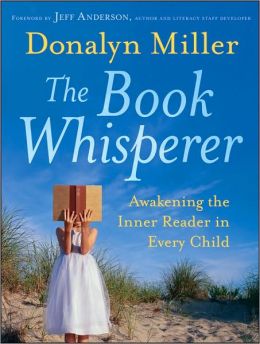

The Book Whisperer: Awakening the Inner Reader in Every Child Author: Donalyn Miller Publisher: Jossey-Bass, 2009 As with most teachers, summer gives me the chance to finally read the stacks of books that have piled up in every nook and cranny of my house. One of the books I looked forward to reading this summer was The […]
Literacy
Posted inFrom the Front Lines, Instruction & Curriculum, Literacy
Well, They Are Just 17…You Know What I Mean? The NAEP in Perspective

The “Nation’s Report Card” is released by The National Assessment of Educational Progress (NAEP) every year where students are tested at ages 9, 13, and 17. In 2012, the testing results for readers at age 17 were abysmal, demonstrating only a 2% growth in reading scores over the past 41 years. I was bemoaning this statistic to a friend who […]
Posted inCommon Core, Current Events in Education, From the Front Lines, Instruction & Curriculum, Literacy, Middle School
Reading for Fun, Not Reading for Fun(ds)
The National Assessment of Educational Progress (NAEP) 2013 test reported that there was a 2% growth in reading scores over the past 41 years for students at age 17. NAEP also reported that students who claimed to read for fun scored higher on standardized tests with the obvious conclusion that the more time a student spent […]
Posted inInstruction & Curriculum, Literacy, Uncategorized
NAEP's Solution to Flat Reading Scores: "Read for Fun"
The release of the National Assessment of Educational Progress (NAEP) Progress Report for 2012 (“Nation’s Report Card”) provides an overview on the progress made by specific age groups in public and private schools in reading and in mathematics since the early 1970s. The gain in reading scores after spending billions of dollars, countless hours and effort […]
Posted inInstruction & Curriculum, Literacy, School Improvement, Uncategorized
Reading Proficiency Increases 2% in 41 Years…That's All.
I recently had to write a position statement on assessment and evaluation. The timing of this assignment, June 2013, coincided with the release of the National Assessment of Educational Progress (NAEP) Progress Report for 2012. This “Nation’s Report Card” provides an overview on the progress made by specific age groups in public and private schools in reading and […]
Posted inInstruction & Curriculum, Literacy, Middle School, Technology
Using Technology in the English/Language Arts Classroom for "Sophisticated Responses"
The headline in The New York Times (6/13/2013) was a little misleading: “Study Gauges Value of Technology in Schools.” The topic of gauging the value of technology is particularly significant given the investment by school districts everywhere in laptops, tablets, computer labs, Smartboards, whiteboards and projectors; but the article only referred to the use of technology in math […]
Posted inCommon Core, Featured, From the Front Lines, Instruction & Curriculum, Literacy
Dear Common Core: Science Supports Reading Fiction
[fusion_builder_container hundred_percent=”yes” overflow=”visible”][fusion_builder_row][fusion_builder_column type=”1_1″ background_position=”left top” background_color=”” border_size=”” border_color=”” border_style=”solid” spacing=”yes” background_image=”” background_repeat=”no-repeat” padding=”” margin_top=”0px” margin_bottom=”0px” class=”” id=”” animation_type=”” animation_speed=”0.3″ animation_direction=”left” hide_on_mobile=”no” center_content=”no” min_height=”none”] English teachers are seduced by literature. We fell in love with an author’s language, a fascinating plot turn, or a well-developed character, and we are bold in our love. While students may roll […]
Posted inCommon Core, Featured, From the Front Lines, Literacy
Up, Up, My Friend…and Quit Your Close Reading!
The Common Core Literacy Standards encourage “close reading”, the careful inspection of a text for analysis, but I believe that the British poet William Wordsworth offers his sly opinion on that practice in one of his poems The Tables Turned. The poem is a plea to the reader to throw down the books with poems […]